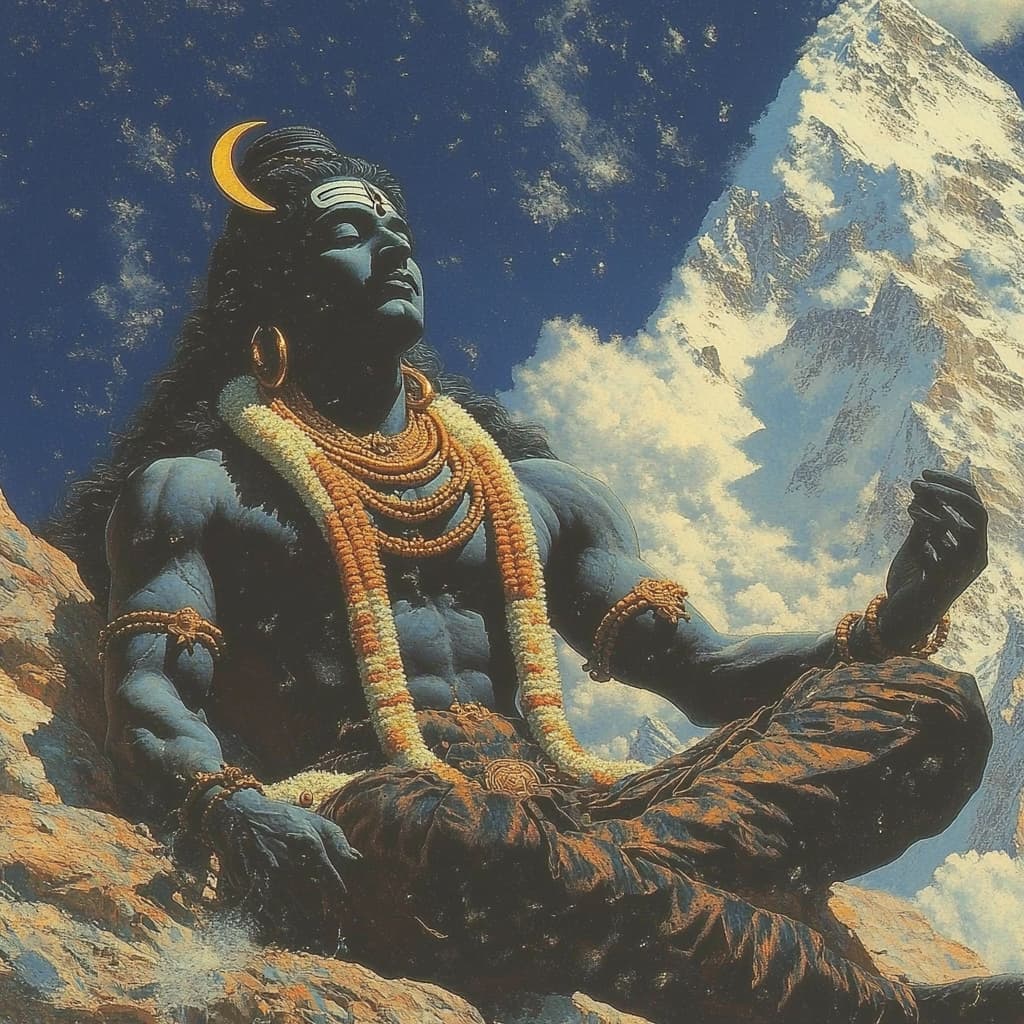
In this lecture, Nish explores early Shaivism—from Pāshupata-vada to Shaiva Dualism (Siddhānta)—and set the stage for later discussions on Vīra-Shaivism (Lingayat Shaivism) and Shaiva Duality-in-Non-Duality.
Akshapāda Darśana = Nyāya Aulūkya Darśana = Vaiśeshika Pāśupata
- Kārya
- Kārana
- Yoga
- Vidhi
- Dukhānta
Atimārga Niśvāsatattvasamhitā The aspirant “may eat and drink anything. No action is forbidden for him. For he is immersed in contemplation of Rudra, knowing that no other deity will save him.” (Lākula Vada) Mantramārga
-
Śaiva Siddhānta (Rauravāgama, Svayambhuvāgama, Svacchandratantra) & Ugrajyoti -> Sadyojyoti‘s (kettapāla/ khettakānanda) “Moksha Karika” (900AD) (commented on by Aghoraśiva) and also “Bhoga Karika”, “Tattva Samgraha”, “Tattvatraya Nirnaya” + Brhaspati (definition for Deva) + Shankara Nandana’s “Prajñālankara”
-
Bhairavāgama
(A) mantrapītha (B) Vidyāpītha (Kāpālika/Yoginī) (i) Yāmala (ii) Vāma (Tumburu Bhairava with Jayā, Vijayā, Jayantī, Aparājitā) (iii) Śakti
- Trika (parā, parāpara, aparā) Siddha-yogeśvarīmata Mālinīvijayottaratantra Tantrasadbhāva + commentarial tradition (śivasūtra/spandakārikā)
- Kālī (Kālasankarshinī/ Krśā in Tā 29.76) Tantrarājabhattāraka/Jayadrathayāmala (24,000 verses)
- Krama (devyāyāmalatantra Jñānetranātha)
- Guhyakālī
- Mata (ciñcinīmatasārasamuccaya- Vidyānandanātha & Nishkriyānandanatha)
A
- Aksapadadarshana (Nyaya reference)
- Aulukya Darshana (Vaisheshika reference)
- Pashupata Shaivism (also noted as Proto-Shaivism)
- Pashu-Pati-Pasha (the Shaiva Trinity)
- Satarudriya Mantra
- The name Satarudriya means "prayer to the hundred thousand Rudras" or "to the Rudra appearing in a hundred thousand forms"
- Three-Part Play (forgetting one’s true nature, seeking liberation, recognition)
- “Kali Standing on Shiva” (energy without ground vs. ground with no meaning)
- Exegesis and Eisegesis: Exegesis
- Involves analyzing the text's original context, literary elements, and connections to other passages Eisegesis
- Involves interpreting the text based on one's own preconceived ideas
- Involves injecting one's own ideas into the text
- Doxographical Hierarchy (ranking of philosophical systems)
- Integrity to Lineage and History (through textual grounding)
- Oral Tradition (in the Vedic context)
- Parama Patra (the leaf oracle)
- Text-Based Approach** (for integrity and accountability)
- Vira (heroic temperament, self-mastery)
- “Killing the Brahmin Within” (transcending orthodox rules)
- Beggars Can’t Renounce (analogy for foundational needs)
B
Unlike some Vedantic views that see the world as illusory, Shaivism sees it as real, a divine expression of Shiva’s play.
- Shiva as the Individual Soul: "Lord Shiva alone becomes the ensouled individual… the embodied soul… and then that person, which is nothing but Shiva, goes on to enjoy myriad experiences which culminate in the recognition… Pratyabhijna, that I am Shiva.
The game is there’s Lord Shiva and then he wants to play for reasons unknown to us… play has no reason, if there’s a reason to play it’s no longer play, it’s work… play is something you do for its own sake."
-
"He plays because he is playful… similarly, fire is hot, there’s no reason for why fire is hot… the cause and the effect are one here… you can’t ask why Shiva plays, it’s his nature to play."
-
"His Lila is such that he hides himself from himself… he appears as these individuals and forgets that he’s Shiva… he doesn’t really forget, he never forgets his inherent purity and freedom, but he acts as if he forgets."
-
Journey of Recognition: "All of life is an attempt to remember, recognize, Pratyabhijna… then you can either merge into your oceanic nature, Shiva, and abide forever more as Shiva, or… you can continue playing… knowing that you’re Shiva and yet you maintain some semblance of finitude in order to enjoy yourself in each and every experience."
- "The whole universe now becomes a revelation… each and every encounter with the universe becomes an encounter with yourself appearing to you in an ever-new way… which allows you to enjoy aesthetic rapture, this is called Swatma Chamatkara, the bliss of encountering yourself in new ways again and again."
Pashu, Pasha, and Liberation
-
Shiva as Pashu: "Shiva, the Lord, the Pati… this supremely free divine being becomes Pashu… Pashu means bound animal… because Shiva enacts what is called Pasha."
- "I don’t like the word bondage… Pasha means bondage… but I think it has more of the connotation of… Kala, voluntary self-contraction."
- "This infinite divine reality… spontaneously and effortlessly contracts himself into an individual Jiva… or in this tradition it’s called Pashu."
-
The Soul’s Quest: "The Pashu craves to recognize his true nature as Shiva… all of life is an attempt to remember… until there is Pratyabhijna, awareness of your inherent Shiva nature."
- "You are Shiva before you forgot, you are Shiva when you are forgetting, and you are Shiva even while you’re trying to remember… when you remember, you realize that you are Shiva all along."
-
Spiritual Life as Play: "It’s like dancing on the edge of a sword… wrestling with tigers… it’s a delightful quest, challenging quest… it requires great tact."
- This metaphor highlights the balance and focus needed to realize one’s divine nature amidst the play of life.
Historical Context: Pashupata Tradition
-
Pashupata Philosophy: "The Pashupatas presented this doctrine which is fivefold in nature… five categories of reality: Karya (the world is an effect), Karana (there must therefore be a cause), Yoga (there must be some method to become one with that cause), Vidhi (there must be some rules and injunctions in order to practice that yoga), and as a result you attain Dukhanta (the end of all suffering)."
- "Moksha according to the Pashupata is defined as the end of all suffering… the means to moksha is defined as yoga and Vidhi… meditation and ritual or contemplation and ritual."
-
Lakulisha’s Reform: "Lakulisha’s Pashupata revival is different… he would say there are only three main categories: Vidya, Kala, and Pashu… and these are three in one, and that one is Rudra or Shiva."
- "The basic trinity of Pashu (bound soul), Pati (the Lord of the bound soul), and Pasha (the binding agent… that which both binds and frees)."
-
Pashupata Practices: "The Lakulishas went to the cremation ground… they were very fond of the cremation ground because Rudra… is described as the god of destruction… tends to live where destruction is most manifest."
- "They start eating out of skull bowls… wearing mortuary symbology like bone necklaces… they carry a skull-top staff and a trident… they start to resemble the god that they worship."
- Mythical Basis: "Shiva performs a penance for having killed Brahma… covers himself with ash, wanders about naked, eats out of a skull bowl, and lives in the cremation ground."
- Interpretation: "They kill the Brahmin within… they were orthodox Brahmins before, but they knew that it was holding them back… to really get to god, to go beyond legalistic religion… they had to leave all these rules behind… when you get intimacy with god, formality flies out the window, rules no longer apply."
Connection to Nyaya and Vaisheshika
-
Shaivite Roots: "The Nyayakas and the Vaisheshikas… Gotama, the founder of Nyaya, and Kannada, the founder of Vaisheshika… both of them were probably Shivas… they are early Pashupatas."
- "Nyaya is all about logic… learning to think in a clear and grounded way… Vaisheshika’s categories are more metaphysical in nature."
- "The Pashupatas were dualist… believed in Rudra as god… distinct from the world in which we appear… this god creates the world… molds the world into existence with something that exists independently of him."
-
Practical Insight: "We should be clear on our thinking… define our terms… carefully check our links in our thinking… an error in our thinking could be like an error in our direction… clarity of thought is what we got from the Nyayas."
C
- Meditation on Shiva: "Look into the heart and see… Shiva… who resembles a mountain of silver… resplendent in the lotus of the heart," emphasizing internal realization over external perception.
- Advaita Shaivism: "There’s only one reality, Shiva… inseparable from Shakti… that thou art… the universe as a playground for Lord Shiva," highlighting non-duality and divine play (Lila).
- Shiva’s Play: "He hides himself from himself… never forgets his inherent purity and freedom… Swatma Chamatkara, the bliss of encountering yourself in new ways," portraying life as a cosmic game of recognition (Pratyabhijna).
- Pashupata Tradition: "Shiva becomes Pashu… through Pasha… voluntary self-contraction… the end of all suffering through yoga and ritual," linking early Shaivism to liberation.
- Cremation Ground Practices: "They resemble the god that they worship… kill the Brahmin within… intimacy with god," symbolizing transcendence of orthodox rules for direct divine connection.
D
Nature of Shiva and Consciousness
- "Shiva is that non dual absolute, the ground of all reality, which in here is in all things as all things."
- "this one non dual reality is called consciousness endowed with power, which reposes in its own innate bliss, endowed with the power of willing knowing and doing, this is Shiva."
- "the external world is nothing but reflection within, so even the so called externality is nothing but a vibration within, shining non differently in the mirror of consciousness."
- "you are that non dual absolute, the ground of all reality, which in here is in all things as all things."
- "that thou art your very essence, nature and the essence of all things, which in here is in all things as all things is one and the same Abed."
Play (Lila) of Shiva
- "Lord Shiva alone becomes the insoled individual, the embodied soul if you will, and then that person which is nothing but Shiva goes on to enjoy myriad experiences which culminates in which culminate in the recognition but your bigger that I am Shiva."
- "he plays because he is playful similarly fire is hot there's no reason for why fire is hot."
- "his Lila is such that he smart marvel and he hides himself from himself."
- "you are Shiva before you forgot, you are Shiva when you are forgetting, and you are Shiva even while you're trying to remember, and when you remember, you realize that you are Shiva all along."
- "he appears as these individuals and forgets that he Shiva, he doesn't really forget remember Nirmala does, so he never forgets his inherent purity and freedom, but he acts as if he forgets."
- "you never forget either as you go through this world and you accumulate experiences, there's always something in you reminding you that there's more freedom to be had."
- "the universe as a playground for Lord Shiva, rather than a framework of illusions, it is a mansion of myth."
Spiritual Practice and Meditation
- "when we meditate on Lord Shiva, we attempt to identify with that which we're meditating upon, so typically we have the image somewhere like over here in the heart, and then we imagine that we're looking in, as if we were on the outside looking in towards the center, it's as if Shiva is seated here."
- "I meditate upon that Lord who is established in deep meditation, sitting in the lotus posture, who is pleased and smiling and ecstatic, lost in somebody."
- "I meditate upon that great Lord Mahisha, who resembles a mountain of silver; Rajata Giri, who shines with glory and is resplendent in the lotus of the heart."
- "the cremation guards are very spiritually rewarding place for a follower Ruthra, because they associate those places with Rudra."
- "no action is forbidden for him, for his immerse in the contemplation of Ruthra, knowing that no other deity will save him."
Individual Soul (Jiva) and Liberation
- "this infinite divine reality Brahman if you will, endowed with this playful nature, spontaneously and effortlessly contracts himself into an individual jiva, or in this tradition it's called pashu, and then the Pashu craves to recognize his true nature as Shiva."
- "all of life is an attempt to remember recognize but there be cure, and then when you recognize party time, then you can either merge into your oceanic nature Shiva and abide forever more as Shiva, or you can continue playing something like a body."
- "the whole universe now becomes a revolution, see each and every encounter with the universe becomes an encounter with yourself appearing to you in an ever new way, which allows you to enjoy aesthetic rapture, this is called Swatma Chamatkara, the bliss of encountering yourself in new ways again and again and again."
- "you crave the infinite, and so the finite can never truly satisfy you."
- "spiritual life is a bit like that, you're attempting to dance on the edge of a sword, it requires great tact."
- "it's like dancing on the edge of a sword, walking always implies you're trying to get somewhere, but in India there are these sword dancers, their art is to dance on the edge of swords."
Devotion and Transcendence
- "you are ever skilled at hiding yourself from yourself, without ever once losing your innate pristine quality of freedom and purity, touches your player Lord, and at this game of hide and seek you are expert oh."
- "I take refuge in you alone you who are the guru, you who are the goddess, you who are the supreme reality, transcendent to the wheel, abyss of trans migratory existence, you are eternal and without limit, you are prior to all experience, manifesting yourself in the hearts of all the variously manifested beings."
- "to really go further to really get to god, to go beyond legalistic religion, to really get to the heart of things, to get to devotion, they had to leave all these rules behind, when you get intimacy with god, formality flies out the window, rules no longer apply."
E
Pashupatta Shaivism - Five Realities (Tatvas):
- Pati: Creator of the trip world; provides means of liberation.
- Kartā: Affecting cause.
- Yoga: Mystical practice, meditation aimed at escape.
- Vidhi: Ritual actions, own unique rules (distinct from Vedic), including deliberate Vedic transgressions.
- Dukhānta: End of suffering, liberation (Moksha).
Chakra Interpretations and Practicality
- Chakras viewed metaphysically as universal mandalas.
- "Seed of Chakra" interpreted as Shakti, foundational energy.
- Multiple chakra systems exist (3, 6, 9, 12).
- Practical meditation: Meditate on heart as chakra, seat chosen deity (Ishta) within heart lotus.
- Advice: Focus on central practices, avoid obsessing about minor chakra details (e.g., Kundalini position).
Tattoos and Tantra
- Sri Chakra tattoo precision important but not absolute.
- Yantra conceptualizations:
- Palace: devotion-centric, minor inaccuracies acceptable.
- Prison: precision important for energy containment.
- Protection through devotion and surrender.
- Recommend tattoo artists from authentic lineages, spontaneous vs. planned sacred tattoo styles discussed.
Diksha & Karma Dynamics
- Diksha creates karmic bond; Guru assumes part of disciple’s karma.
- Rules (vegetarianism, celibacy) safeguard Guru from negative karmic transfer, maintain disciple's purity.
Yantra: Palace vs. Prison
- Yantra as palace: Focus on devotion, beauty, deity’s residence, minor precision errors tolerable.
- Yantra as prison: Precision crucial to contain energy, high precision required.
- Sri Vidya yantra beneficial overall, even with minor mistakes; devotion as primary protective measure.
Shiva and Shakti Balance
- Shiva provides steadiness and structure (Pashupati).
- Shakti energy needs Shiva's grounding force.
- Balance is crucial; aim of Tantra practice is unity.