The Constant State
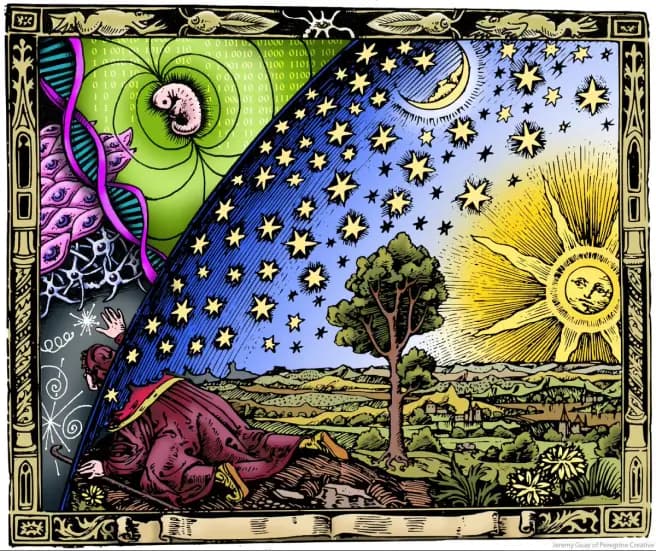
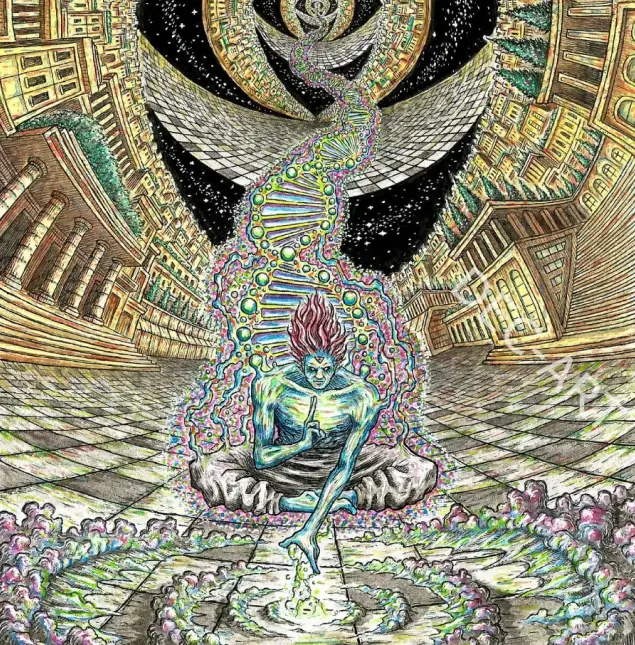
Synchronicity is not something that occasionally happens to you. It is always happening. The entire fabric of reality is synchronistic: every moment, every event, every thought is woven into a seamless web of meaningful connection. What we typically call "synchronicity" is merely a momentary glimpse of this underlying truth, a crack in the perceptual filter that normally obscures it.
Most people experience synchronicity as rare, striking coincidences: the friend you were just thinking about calls, the book you need falls off the shelf, the answer appears the moment you ask the question. These moments feel special precisely because they interrupt our ordinary mode of perception. But they are not special occurrences breaking through normality. They are normality breaking through the illusion.
Jung's Framework
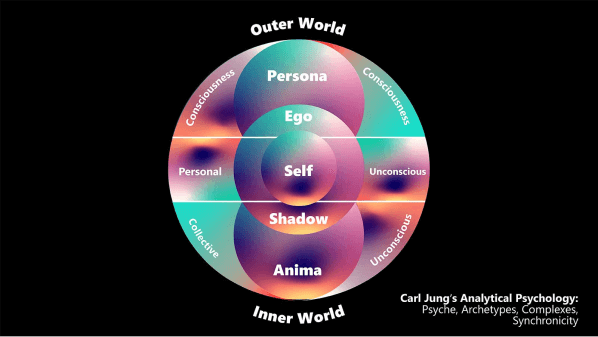
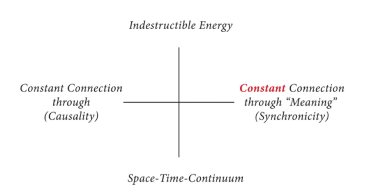
Carl Jung introduced synchronicity "to describe circumstances that appear meaningfully related yet lack a causal connection." He waited until late in his career to focus on it because of its controversial implications: that effect does not logically follow cause. He worked closely with physicist Wolfgang Pauli, who saw synchronicity as relevant to quantum mechanics.
Jung's definitions:
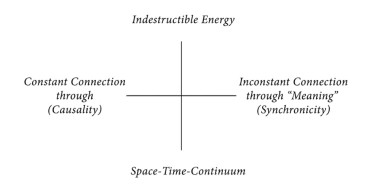
- Simultaneous occurrence of two meaningful but not causally connected events
- A coincidence in time of two or more causally unrelated events which have the same or similar meaning
- The simultaneous occurrence of a certain psychic state with one or more external events which appear as meaningful parallels to the momentary subjective state
Jung asserted that precognition (perceiving future events in the present) proves that synchronistic events have to do with a relationship across time, not merely simultaneous occurrence. They fall into the same category whether separated by space or by time.
Beyond Glimpses
Jung identified emotion and unconscious imagery as necessities for synchronicity to be perceived. But this framing assumes synchronicity is something that "takes place" rather than something that always is.
The experience of synchronicity is interwoven with sudden emotional recognition: the surprise that interrupts what we take for granted as cause and effect. But this surprise is not because something unusual happened. It is because we momentarily stopped filtering it out.
If you go deeply enough into your own awareness to come near to its source, everything is perfectly ordered and put together with everything else. What we call synchronicity is merely a glimpse of this. The question is not "why does synchronicity happen?" but "why do we not perceive it constantly?"
The Practice of Continuous Awareness
With sustained practice, one can move beyond catching occasional glimpses to living within the synchronistic field continuously. This is the state underlying precognition, preknowledge, and what traditions have called various forms of knowing that transcend ordinary causality.
The shift is not about making synchronicity happen more often. It is about dissolving the perceptual barriers that prevent us from recognizing what is already and always occurring. The veil lifts not through effort but through release: the release of the assumption that events are fundamentally separate, that time flows only forward, that mind and world are distinct.
Synchronicity, understood this way, is not a phenomenon to be studied but a mode of being to be entered. When we experience a meaningful coincidence that seems to defy causality, we are not witnessing a glitch in the matrix but a revelation of the deep interconnectedness that is reality, not pervades it, but constitutes it entirely.